
Choral | Orchestral | Wind
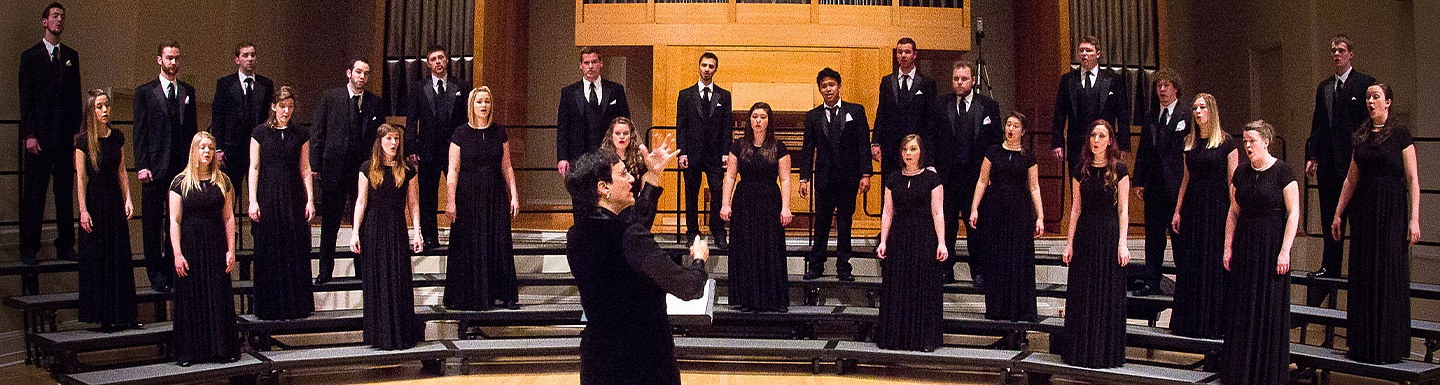
Master of Music in Conducting with a Choral Emphasis
The choral conducting program emphasizes podium time, supported by the study of conducting, rehearsal technique, choral literature, score study, vocal pedagogy, and diction, along with music history and performance practice.
Graduates pursuing a MMus in Conducting with an Choral Emphasis will take courses which focus in the following areas:

Master of Music in Conducting with a Orchestral Emphasis
David Jacobs, orchestral conducting faculty
The orchestral conducting program at the University of Oregon is designed for 1-2 conductors to gain valuable experience conducting orchestras of all levels, from non-music majors to professionals. Students have a weekly studio class with a string quartet where they work through standard canonical works from Baroque to 21st-century repertoire. This course represents a significant opportunity to hone gestural vocabulary to discover how to get what you want out of an orchestra. We also study scores, repertoire, interpretation, bowings, etc.
Additionally, students can coach and conduct student musicians weekly. Students are also able to conduct the campus orchestra, made up of non-majors from across the campus community, as well as music education majors in rehearsal and performance. They also serve as assistants for the University of Oregon Symphony Orchestra (UOSO), where they will conduct sectionals and smaller works in performance. Finally, each student’s capstone project will include a major work with the UOSO. Past students have conducted full Brahms, Beethoven, and Schubert symphonies, as well as tone poems like Scheherazade, and Tchaikovsky's Romeo and Juliet.
Select students will have the opportunity to act as assistants to three professional orchestras based in Eugene: the Eugene Symphony Orechestra (ESO), the Oregon Mozart Players, and the Eugene Opera. These organizations represent some of the finest musical institutions in the Northwest, and provide students with invaluable experience working with professionals, as well as giving them one-on-one access to their conductors. Past students who have conducted the ESO in rehearsal are listed in their program as a conducting fellow and awarded a stipend. The OMP, Eugene’s premiere chamber orchestra, has awarded students a stipend to act as assistant conductor, offering the opportunity to conduct works in concert under the tutelage of Kelly Kuo. Finally, the Eugene Opera gives students the opportunity to conduct off-stage groups and are given unprecedented access to Maestro Bisantz to learn about the nuances of opera conducting.
Given the robust opportunities available to conducting students, the orchestral program has been proud to attract some of the finest young conductors in the country, hailing from prestigious programs such as the University of Georgia, Eastman, Indiana University, and the New England Conservatory. Even more importantly, they have gone on to equally prestigious programs after graduation. Dr. Jacobs’ students have been accepted into the conducting program at Aspen, and doctoral programs such as Michigan State University, Eastman, and Peabody. Read testimonials from previous orchestral conducting students.
Graduates pursuing a MMus in Conducting with an Orchestral Emphasis will take courses which focus in the following areas:
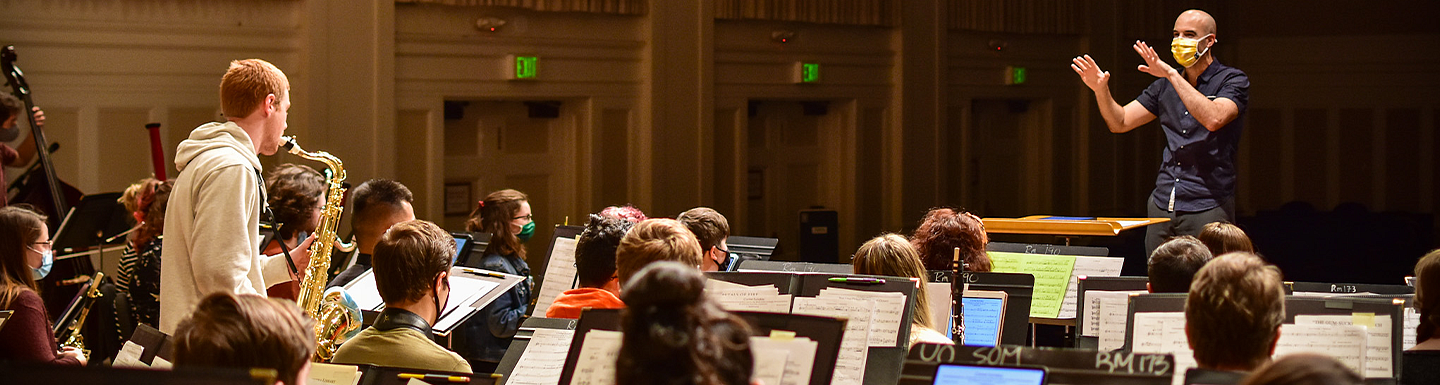
Master of Music in Conducting with a Wind Emphasis
The wind conducting program features the study of wind literature, conducting, rehearsal technique, program operations, score study, and time on the podium.
In all three programs, a small cohort of graduate students work together in an engaging, challenging, and supportive environment. Over the past 10 years, all our graduates have either found music-related employment or progressed to prominent doctoral programs.
Graduates pursuing a MMus in Conducting with a Wind Emphasis will take courses which focus in the following areas:
Student Support
Have questions on your degree requirements? Need information on undergraduate scholarships and awards? Check out these resources to get the support you need.